
Bone Density Testing
What is Osteoporosis?
Osteoporosis literally means ‘Porous Bones’. It occurs when the rate of bone renewal does not match the rate of breakdown, eventually resulting in weak, brittle bones. Sufferers generally do not realise they have the condition until they break a bone, by which time it is too late for them to take the most effective action.
Often, the condition is a result of a lifetime’s failure to take preventative measures: Osteoporosis has been referred to as
a ‘Pediatric disease with geriatric consequences.’
Normal Bone
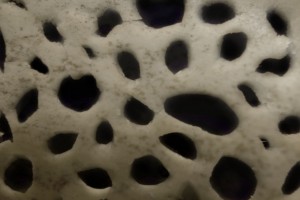
Osteoporotic Bone
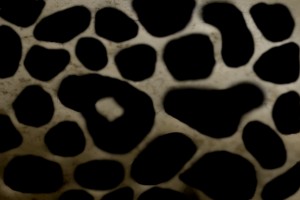
Facts and figures
The incidence of osteoporosis has almost doubled in the last 30 years. In Britain more than 500,000 received treatment for fragility fractures every year as a result of osteoporosis, costing an estimated £4.4 billion to the NHS.
This has surpassed the 1994 prediction that by 2020 the cost would have been 2.1 billion. It seems that we are far from getting to grips with this condition. This is without the indirect costs, such as pain, time off work, lost productivity, and the untold social effect on the families of patients.
Estimates vary, however it has been stated that after the age of 50, 1 in 2-3 women, and 1 in 5-12 men in the UK will sustain
a fracture, in the main due to osteoporosis. In fact, more women die each year from osteoporosis than die from cancer of the ovaries, uterus and cervix combined. This is a frightening and unnecessary statistic for a condition that is both preventable and treatable.
The World Health Organisation suggests that health promotion and preventative measures are crucial for containing the effects of osteoporosis on the world population
Hip fracture
Of all of the fractures that occur as a result of osteoporosis, hip fracture is the most serious. Hip fractures alone account for 69000 emergency admissions into English hospitals, adding up to 1.3 million bed days and a cost of £1.5 billion each year.
That is only the hospital costs! Once you add in the combined cost of hospital and social care for patients with a hip fracture the cost is well over £2 billion per year in the UK. Depending upon the estimate, white, postmenopausal women have a one in six or one in seven risk of sustaining a hip fracture in their lifetime. This is higher than the risk of developing breast cancer. Out of four women that suffer this type of fracture, only one will ever recover completely; the rest will suffer permanent disability.
Typically one in four will die within a year. The worst news, though, is that 80% of older women would rather die than experience the pain, disability, and reduced quality of life that follows from a serious hip fracture and subsequent admission into a nursing home.
Combat Osteoporosis – it is preventable and treatable!
It is often difficult to get a bone density scan or treatment for osteoporosis, even if you have already had a fragility fracture(!) and it can be expensive to pay for a private appointment. I can offer you the chance to have your bone density checked, either by participating in – or hosting– a bone density awareness and testing day.
I offer a heel quantitative ultrasound scan (or QUS), which has been shown to be a reliable indicator of bone density and fracture risk in particular, of hip fracture risk.
QUS is comparatively reasonably priced, and free from radiation, as it uses sound waves rather than X rays to measure bone density. This type of test has been recommended as a ‘first step’ to educate yourself about your bone health and safeguard yourself against osteoporosis. Find out more about the type of test I offer.
Take Action!
If you have a bone density test with me, I will take the time to explain exactly what your results mean to you. I’ll also give you two sets of copies of your results – one emailed to you to keep, and one printed that you can give to your GP if you wanted too. From my perspective, one of the most important things about having a test is that screening bone density and explaining the results of the scan to the individual has been shown to be a motivator of osteoporosis preventive behavior.
In other words, after having a scan with me you will be much more likely to go out and actually act upon the advice that I give – much more than if I just gave you the advice on its own or, for example, handed out leaflets at a stall or stand.
From the results of this test, and the information and advice I give out, you, and your colleagues, employees, members or even friends will be better educated and motivated to help combat this illness, giving you all agreater chance of maintaining your bone density in later life.